 Tap to zoom
How Long Does Molluscum Contagiosum Take to Go Away?
Molluscum contagiosum often clears on its own within 2 to 6 months, but some cases last a year or longer and need medical evaluation.
- نویسنده
- دکتر مهدی قاضی
- Published on
- September 28, 2025
- Reading time
- 2 min read
- Last updated
- Updated: June 26, 2026
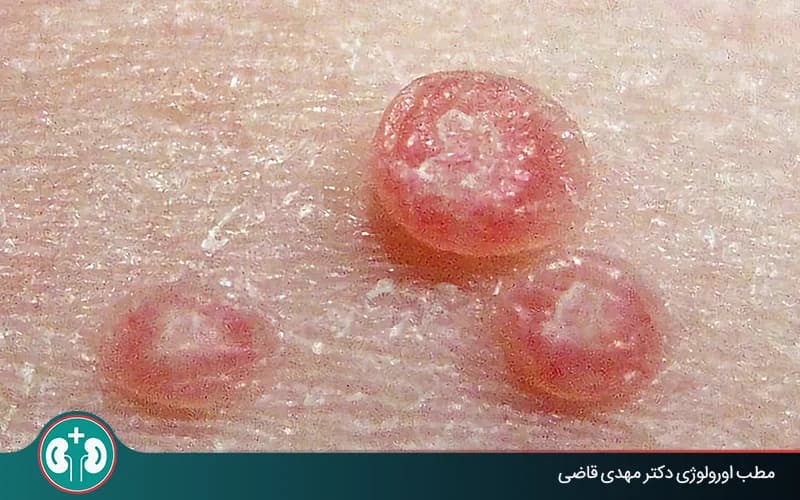
Molluscum, or molluscum contagiosum, usually clears on its own within 2 to 6 months, but in some cases it may remain for a year or longer. The speed of recovery depends on the person’s immune system, the location of the lesions, and the extent of skin involvement. In children with a healthy immune system, molluscum often improves without any specific treatment.
Molluscum is a superficial viral skin infection that causes small, round, shiny bumps, sometimes with a central dimple. These lesions are usually painless and may be skin-colored, white, or pink.
Molluscum spreads through direct skin-to-skin contact or contact between skin and contaminated objects. Because the virus stays on the skin surface, new lesions may sometimes appear in other areas or recur after temporary improvement. Scratching or picking at these lesions can also spread them and prolong healing.
In most cases, molluscum does not need urgent treatment, but in certain situations it is better to see a specialist. If molluscum lesions remain for more than 6 months, appear in the genital area, are accompanied by inflammation, severe itching, or secondary infection, or increase in number, consultation with a dermatologist or urologist is necessary.
An important point is that molluscum lesions are usually less dangerous than genital warts and often go away on their own. However, because they can look similar, they are often mistaken for genital warts. Accurate diagnosis is possible only by a urologist or dermatologist; therefore, if you notice suspicious lesions, seeing a doctor is necessary for correct differentiation and proper treatment.
Actions & related links
Doctors for this topic in Mashhad
See all doctors: Male genital warts specialists in Mashhad




About the author
Urologist
دکتر مهدی قاضی, Urologist in Mashhad. Articles on this site are written and reviewed under the supervision of the Urology Building's physicians.
View profile & bookRelated articles
All articlesBenign Urethral Lesions in Adults
دکتر مهدی قاضی · June 26, 2026
What Is Pyelonephritis? Kidney Infection Symptoms, Diagnosis, and Treatment
دکتر مهدی قاضی · March 20, 2026
Kidney Atrophy: Can a Small Kidney Be Dangerous?
دکتر مهدی قاضی · March 20, 2026
What Is Polycystic Kidney Disease? (Fetal and Adult PKD)
دکتر مهدی قاضی · March 20, 2026
Comments
0 comments
No comments yet. Be the first to share your thoughts.