 Tap to zoom
Can Kidney Stones Cause Kidney Failure?
Untreated kidney stones can rarely damage the kidney or lead to kidney failure, especially through obstruction, infection, or chronic inflammation.
- نویسنده
- دکتر مهدی قاضی
- Published on
- March 17, 2026
- Reading time
- 2 min read
- Last updated
- Updated: July 20, 2026
Yes. In rare cases, if no medical evaluation or treatment is provided for kidney stones, the kidney can be damaged and may even fail. Fortunately, when kidney stones are diagnosed and treated on time, this risk is greatly reduced. Early care for kidney stones is therefore one of the most important ways to prevent more serious problems such as kidney failure.
Kidney failure can occur because of urinary obstruction or direct damage to kidney tissue:
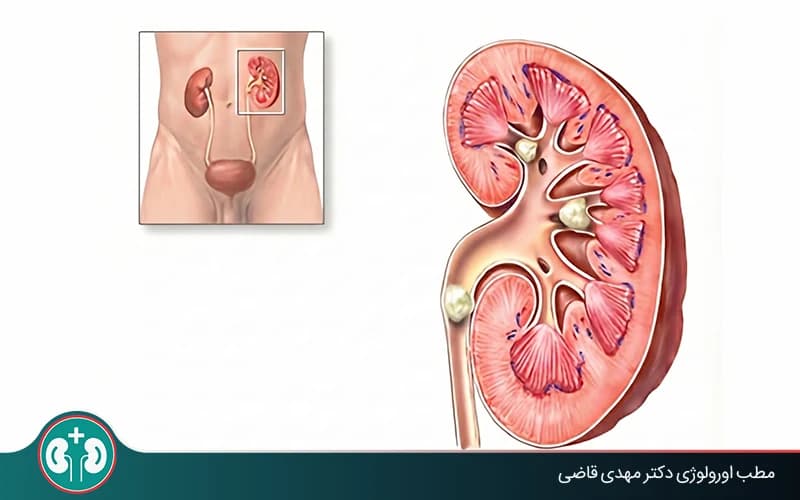
Damage caused by urinary obstruction: Sometimes a urinary stone becomes stuck while passing through the urine outflow tract and blocks it. If this obstruction is not relieved in time, the kidneys come under significant pressure and the person may also develop a urinary tract infection. If the condition continues, kidney function gradually becomes impaired and can eventually fail.
Direct damage to kidney tissue: In some cases, such as staghorn stones, a kidney stone can remain in the kidney without symptoms for a long time, grow larger, and even fill the inside of the kidney. Large stones inside the kidney can causechronic inflammation, scarring, and fibrosis that directly damage kidney tissue and eventually lead to kidney failure.
Of course, in many of these patients, the main cause of damage is long-standing urinary obstruction and an associated infection. If an ultrasound has shown that you have a kidney stone; but you are not experiencing symptoms, you are not free of risk and should seek treatment sooner.




Therefore, if you currently have kidney stones or have had them before, stay under regular medical follow-up, drink enough water, and most importantly, do not use self-directed treatments. Remember to take warning signs such as fever, severe pain, or a noticeable decrease in urine volume seriously, and see a doctor immediately if any of them occur.
Actions & related links
Doctors for this topic in Mashhad
See all doctors: Best Kidney Stone Doctors in Mashhad
About the author

Urologic Surgeon
دکتر مهدی قاضی, Urologic Surgeon in Mashhad. Articles on this site are written and reviewed under the supervision of the Urology Building's physicians.
View profile & bookRelated articles
All articlesBenign Urethral Lesions in Adults
دکتر مهدی قاضی · June 26, 2026
What Is Pyelonephritis? Kidney Infection Symptoms, Diagnosis, and Treatment
دکتر مهدی قاضی · March 20, 2026
Kidney Atrophy: Can a Small Kidney Be Dangerous?
دکتر مهدی قاضی · March 20, 2026
What Is Polycystic Kidney Disease? (Fetal and Adult PKD)
دکتر مهدی قاضی · March 20, 2026
Comments
0 comments
No comments yet. Be the first to share your thoughts.