
 Tap to zoom
Is Urethral Stricture Dangerous in Children?
Urethral stricture in children can be serious if it prevents complete bladder emptying or causes recurrent infections, reflux, or kidney damage.
- نویسنده
- دکتر مهدی قاضی
- Published on
- September 23, 2025
- Reading time
- 2 min read
- Last updated
- Updated: June 26, 2026
In some children, depending on severity and symptoms, yes. If urethral stricture is not diagnosed or treatment is delayed, it can cause more serious problems such as recurrent urinary tract infections, reflux of urine toward the kidneys, and even kidney damage.
These risks become especially serious when the urethral narrowing prevents the bladder from emptying completely. For this reason, early diagnosis and treatment follow-up are very important.
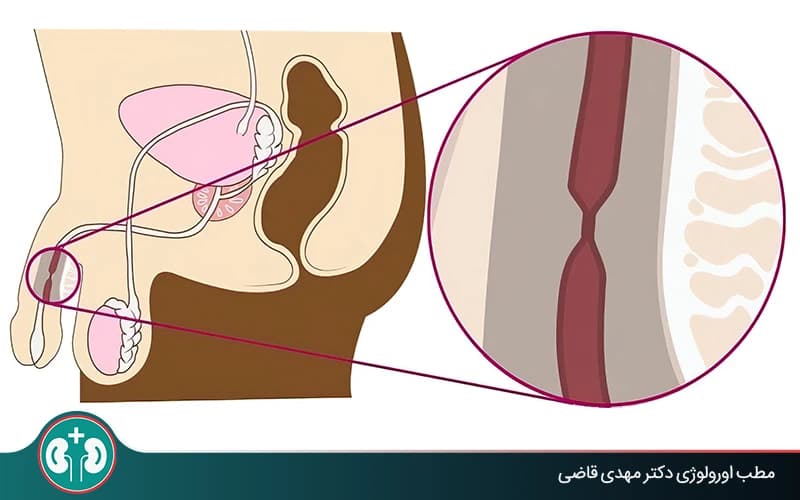
Urethral stricture means narrowing of part of the urine outflow channel, and in children it is more common in boys. There are several possible causes:
Congenital problem
History of genital surgery, such as hypospadias repair, for hypospadias (a congenital condition in male infants in which the urethral opening is located below the normal position at the tip of the penis)
Recurrent urinary inflammation or infection
A mild urethral stricture may only cause a thin urine stream or a longer time to urinate, but in some cases it causes urine retention, incontinence, or ascending infections that directly threaten kidney function.
The good news is that most cases of urethral stricture in children can be treated with effective and safe surgical methods. Children with this problem often have symptoms such as straining to urinate, an intermittent stream, urine remaining in the bladder, or recurrent urinary tract infections.
In severe cases, urination may stop completely and emergency drainage with a catheter may be needed. If your child has these symptoms, it is better to see a pediatric urologist as soon as possible. Timely treatment can prevent most complications and help avoid permanent kidney damage.
Actions & related links
Doctors for this topic in Mashhad
See all doctors: Best Pediatric Urologists in Mashhad




About the author

Urologic Surgeon
دکتر مهدی قاضی, Urologic Surgeon in Mashhad. Articles on this site are written and reviewed under the supervision of the Urology Building's physicians.
View profile & bookRelated articles
All articlesBenign Urethral Lesions in Adults
دکتر مهدی قاضی · June 26, 2026
What Is Pyelonephritis? Kidney Infection Symptoms, Diagnosis, and Treatment
دکتر مهدی قاضی · March 20, 2026
Kidney Atrophy: Can a Small Kidney Be Dangerous?
دکتر مهدی قاضی · March 20, 2026
What Is Polycystic Kidney Disease? (Fetal and Adult PKD)
دکتر مهدی قاضی · March 20, 2026
Comments
0 comments
No comments yet. Be the first to share your thoughts.