 Tap to zoom
What Happens to Sperm After Vasectomy?
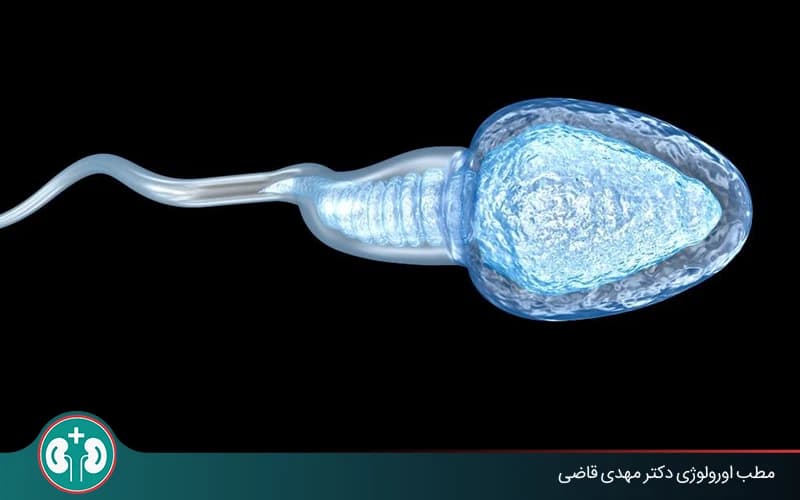
After vasectomy, the testicles keep making sperm, but sperm cannot enter semen. The body absorbs unused sperm naturally, and backup contraception is needed until clearance is confirmed.
- نویسنده
- دکتر مهدی قاضی
- Published on
- March 18, 2026
- Reading time
- 2 min read
- Last updated
- Updated: June 26, 2026
After a vasectomy (Vasectomy), the testicles continue to produce sperm, but the pathway for sperm to leave and enter the semen has been blocked; for this reason, pregnancy does not occur. Below, we explain the vasectomy process, its effect on sperm production, and what happens to sperm after the procedure in more detail.
In general, after sperm are produced in the testicles, they enter the epididymis and mature there over several days to several weeks so they can fertilize an egg. The epididymis is a narrow, coiled tube behind each testicle, and its main role is to store, mature, and transport sperm before they leave the body.
After vasectomy, the path through the vas deferens, the tubes that carry sperm from the testicles to the ejaculatory ducts, is cut or blocked. However, the testicles continue to produce sperm after the procedure. These sperm remain for a while inside the testicle and epididymis (Epididymis), and are then absorbed by the body.
In fact, immune cells break down the sperm, and their components return to the body's metabolic cycle, just like what happens to many other dead cells in the body. This process is normal and usually does not cause pain or inflammation.
Sperm remaining in the testicles is not dangerous. In rare cases, however, mild inflammation or a granuloma, a small inflammatory lump caused by accumulated sperm, may develop and can be treated. If pain, swelling, or persistent changes in the testicle occur, it is best to see a urologist.
In addition, it is recommended to use another method of birth control for some time after vasectomy until the pathway has been confirmed to be fully cleared, because a small amount of sperm may still remain in the vas deferens.
Actions & related links
Doctors for this topic in Mashhad
See all doctors: Best Male Infertility Doctors in Mashhad



About the author
Urologic Surgeon
دکتر مهدی قاضی, Urologic Surgeon in Mashhad. Articles on this site are written and reviewed under the supervision of the Urology Building's physicians.
View profile & bookRelated articles
All articlesBenign Urethral Lesions in Adults
دکتر مهدی قاضی · June 26, 2026
What Is Pyelonephritis? Kidney Infection Symptoms, Diagnosis, and Treatment
دکتر مهدی قاضی · March 20, 2026
Kidney Atrophy: Can a Small Kidney Be Dangerous?
دکتر مهدی قاضی · March 20, 2026
What Is Polycystic Kidney Disease? (Fetal and Adult PKD)
دکتر مهدی قاضی · March 20, 2026
Comments
0 comments
No comments yet. Be the first to share your thoughts.